MY HEART IS FIXED
A Step-by-Step Guide to Personal Spiritual Renewal
for Choir Members, Musicians, and Worship Leaders
“My heart is fixed, O God, my heart is fixed: I will sing and give praise.” — Psalm 57:7
A Step-by-Step Guide to Personal Spiritual Renewal
for Choir Members, Musicians, and Worship Leaders
“My heart is fixed, O God, my heart is fixed: I will sing and give praise.” — Psalm 57:7
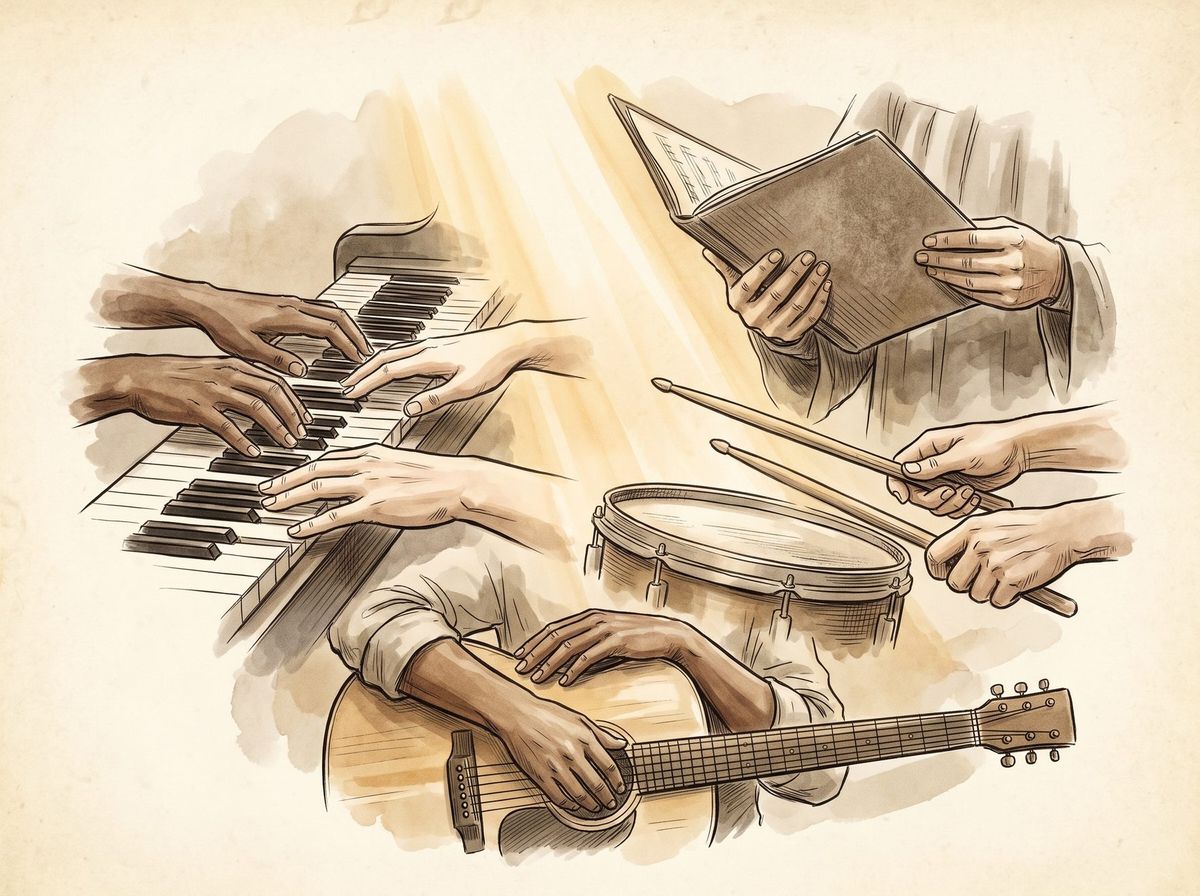
"It came even to pass, as the trumpeters and singers were as one, to make one sound to be heard in praising and thanking the LORD... that then the house was filled with a cloud, even the house of the LORD... for the glory of the LORD had filled the house of God." 2 Chronicles 5:13–14
None of us ended up in this choir stand by accident. Not the voice in your throat, not the ear that finds the harmony, not the hands on the keys or the sticks or the strings. It is not coincidental; it is providential. God does something deliberate in every life: first, He pours in gifts, raw talent, and natural abilities. Then He walks us through trials, pressures, and seasons of sifting, not to break us, but to sharpen and hone what He poured in. Then He places us right where those sharpened tools are needed most. Your seat in this ministry is a placement, not a coincidence.
I watched that truth stand up and sing one summer Sunday at St. John Missionary Baptist Church in Little Rock, where I serve as Minister of Music, when our ensembles came together as one combined choir — one rehearsal, every group represented, one sound lifted in praise. And God met us! That is the picture in 2 Chronicles 5 (KJV): when the trumpeters and singers were as one, making one sound, the glory of the LORD filled the house. Moments like that are not meant to be souvenirs. They are meant to be previews.
But here is an honest word, from my heart to yours. Those of us who handle worship weekly face a particular danger: we can end up singing about a fire we have stopped tending. We are at church more than anyone. We touch holy things constantly. And it is entirely possible to mistake proximity to worship for participation in worship: the rehearsals continue, the robes go on, and the anthems are learned, while the fire underneath quietly goes out.
That is why this little book exists. It is not a program to complete. It is a pathway to walk — seven steps of personal renewal, taken at your own pace, and taken again whenever the fire runs low. Its purpose is simple: that singers and musicians in every choir stand, beginning with the ones I serve, would be, first and always, worshippers — hearts fixed on the Lord — so that when we make one sound, the glory has a house to fill.
How to use this book. One step a week is a good pace, but your pace matters. For each step: read the teaching, do the one practice (just one — not five new disciplines; one old fire, relit), sit with the one question, and pray the prayer. When you have walked all seven, sign the Renewal Covenant at the back. And when a dry season comes, it will come; open the book again at Step 1 and re-date your covenant. This book is not meant to be finished. It is meant to be returned to. Scripture is quoted from the King James Version unless otherwise noted.
One more thing before you begin. Every step’s practice below opens the same way: a few unhurried minutes of solitude before God, what Ruth Haley Barton calls the discipline of getting quiet enough to let your soul tell the truth. You’ll meet a piece of that practice at the front of each step. The whole guide is waiting for you in the Appendix, whenever you want to sit longer with it.
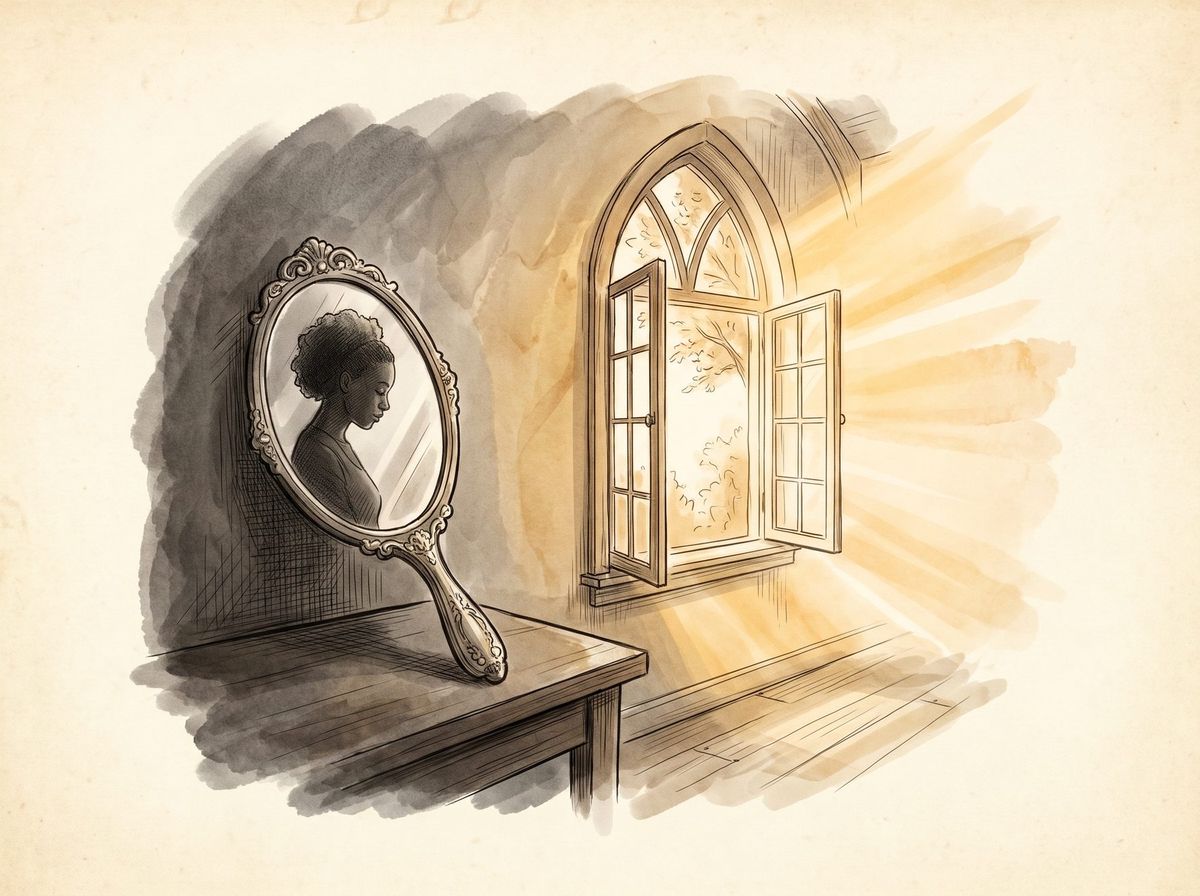
Before there was ever a choir stand, there was a covering cherub. Scripture pulls back the curtain on a being of staggering endowment, "full of wisdom, and perfect in beauty," adorned with every precious stone, blameless from the day he was created (Ezek. 28:12–15). Whatever else we say about him, say this: he lacked nothing in gifting. And he fell anyway. These oracles were first spoken against the kings of Tyre and Babylon, but their language reaches past any earthly throne, and the church has long heard in them the adversary's own fall. Either way, the posture is the same. Not because his gifts failed. But because his heart turned. "Thine heart was lifted up because of thy beauty; thou hast corrupted thy wisdom by reason of thy brightness" (Ezek 28:17 KJV). The gift became a mirror instead of a window. Where worship once flowed through him to God, it stopped at him, I will ascend, I will exalt my throne, I will be like the Most High (Isa. 14:13–14).
Here is the warning for every one of us who carries a gift into the sanctuary: giftedness is not godliness. Talent is not transformation. The voice, the hands, the ear — these are endowments, and endowments can keep performing long after the heart has stopped worshipping. If iniquity could be found in a perfect creature who was standing in God's unveiled presence, then none of us can assume our proximity to worship protects us. The question is never how bright the gift is. The question is where the heart is pointed.
But heaven gives us a second portrait. Where the covering cherub looked at his own brightness and said, “I will ascend” (Isaiah 14:13), the Son of God, who shared the Father’s glory before the world was (John 17:5), looked at a cross and felt its full weight. “Now is my soul troubled,” He said, “and what shall I say? Father, save me from this hour?” Then He turned from that prayer and prayed another: “Father, glorify thy name” (John 12:27–28). Not His comfort. Not His escape. Glorify thy name, even here, even in this. And heaven answered out loud: "I have both glorified it and will glorify it again."
There it is — the two postures available to every gifted person who has ever stood before a congregation. Lucifer took his endowment and turned it inward: the gift became a mirror. Christ took His glory and poured it upward and outward: "he made himself of no reputation and took upon him the form of a servant" (Phil. 2:7). One grasped for a throne and was cast down. The Other emptied Himself and was highly exalted, given a name above every name.
Every time you take your place on the choir stand, pick up your instrument, or step up to a microphone, you re-enact one of these two postures. There is no third option. The gift will point somewhere — at you, or through you.
This same choice played out in Isaiah’s day. On the surface, everything looked revival-ready. God’s people loved going to the temple. They kept the calendar, kept the fasts, raised their hands, and looked eager to praise. But God saw through it: the outward production they called worship was just that — a production. "This people draw near me with their mouth, and with their lips do honour me, but have removed their heart far from me" (Isaiah 29:13; see also Matthew 15:8–9). Worship had become a trend, a habit, a thing to do, a cultural rhythm rather than a consecrated life. They were in love with worship, but they had fallen out of love with the God who is the Object of worship. As that old blues record says, the body was in the room, but the mind was on the other side of town.
Today, you can still tell the true worshippers from the "churchers." Churchers are shallow worshippers. They are focused on everything and everybody except the Lord in worship: the music is too loud, the sermon is too long, the building is too cold, look at what they have on. Shallow worship collapses when life gets uncomfortable; when ‘churchers’ hit hard times, the complaint rises: "God, why is this happening to me?" and it never rises higher than the complaint.
True worshippers hurt too. They cry out too; the psalms are full of honest "why" and "how long." But they don’t stop there. To a true worshipper, adversity is not an extinguisher — it is an accelerant. Trouble does not put out their fire; it pours high-octane fuel on it and sets their praise ablaze. They worship through discomfort, love God in the valleys, and praise Him in the midst of a storm-tossed life. Why? Because a true worshipper’s heart is fixed on the Lord.
David knew it in the cave — Saul breathing down his neck, trouble on every side — and he did not hide his fear from God: "my soul is among lions" (Psalm 57:4). But he did not stay there. He filled that cave with an echo of praise: "My heart is fixed, O God, my heart is fixed: I will sing and give praise" (Psalm 57:7). True worship should never be inhibited by circumstances; true worship should be ignited by them.
And beware the subtle trap being taught today — call it transactional worship — the notion that the power is in your praise. If the power is in my praise, then shout louder, dance harder, and gain a greater response from God. But praise is not magic, and praise is not divine currency. “God hath spoken once; twice have I heard this; that power belongeth unto God” (Psalm 62:11). The power is not in the vibration of your vocal cords — the power is in the God to whom you sing. True praise does not manipulate the hand of God; true praise surrenders to the heart of God.
I know this terrain personally. Back in high school and college, my friends and I loved going to church. We fell deeply in love with church culture — the choir, the dynamic organ runs, the cadence of skilled preachers, the atmosphere, the after-church fellowships. We loved to sing and shout. We loved church! But somewhere in the middle of all that church-love and churchy activity, I found myself drifting further and further from my first love. I was "churchin’," but it wasn’t working. I was going to church, but the church was not growing in me. Church was on my schedule, but Christ wasn’t at the center of my heart. I was sitting in the building, but the truth wasn’t living in me. It is a shame to sing songs like angels and quote scriptures like Paul, then take inventory of your heart and find the power of the gospel has little effect on your life—to discover you are powerless because you cared less about the power of the Gospel than your performance before people.
So, before God sends any of us to fix anything out there, He says: let Me fix the altar of your heart. You can’t get to the alley until you’ve been to the altar. And you cannot perform your way into renewal, any more than you can rehearse your way back to God. Formation happens the way Jesus said fruit happens — by abiding (John 15:4–5) — by positioning your heart, again and again, where the Spirit of God renews it. That is what the seven steps ahead are for. They are not a performance to master. They are places to stand where God does the work.
Which way is your gift pointed? Turn the page, and let’s find out together.
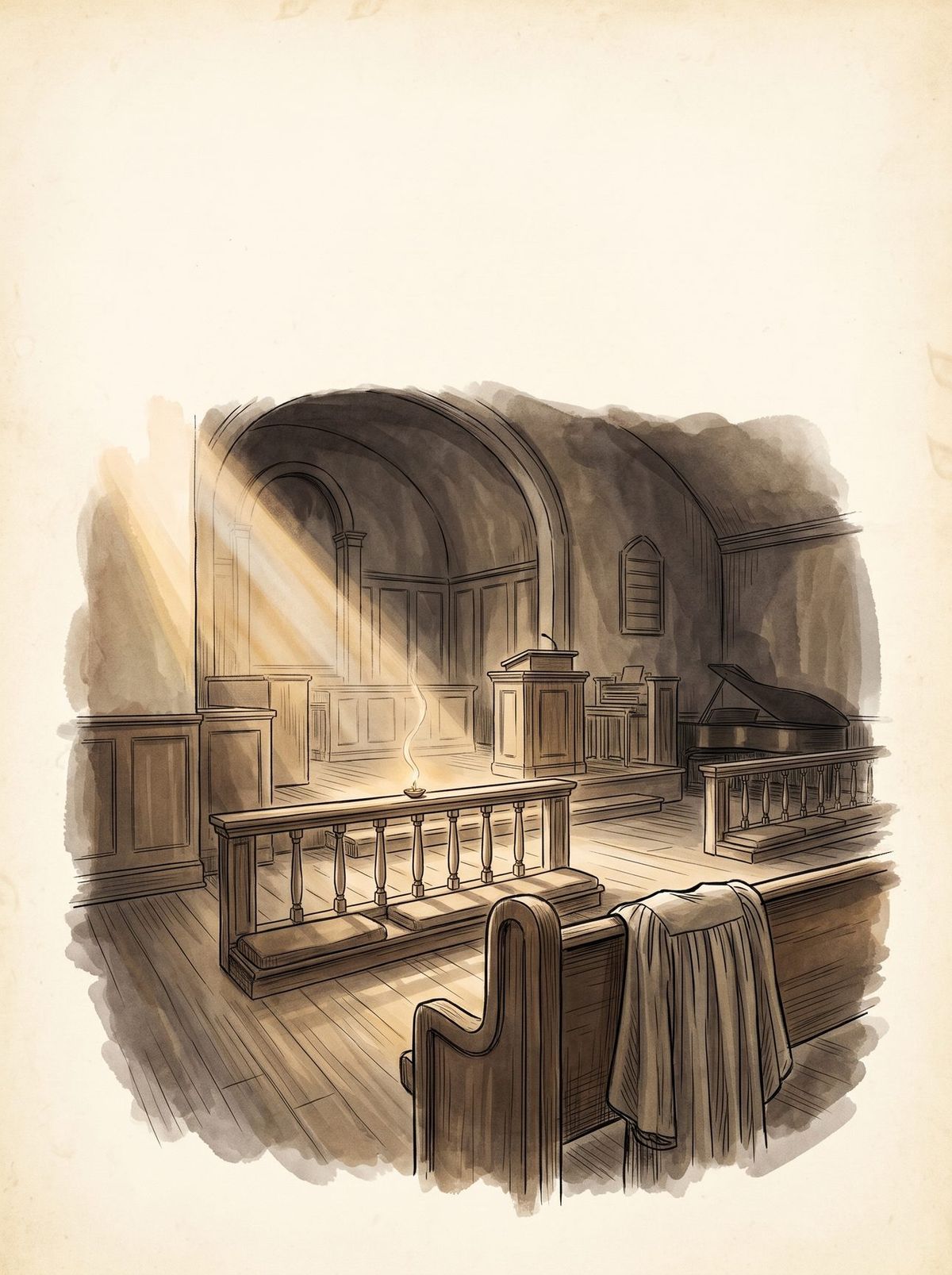
"Search me, O God, and know my heart: try me, and know my thoughts: and see if there be any wicked way in me and lead me in the way everlasting."
Psalm 139:23–24 · see also Lamentations 3:40
Every musician knows the moment before the downbeat. The room settles, the director’s hands rise, and everything depends on whether you are actually ready — not whether you look ready. Renewal begins the same way. Remember Isaiah’s worshippers from the opening pages: the calendar kept, the hands raised, and the heart far away (Isaiah 29:13). They looked ready, but they were not.
That danger runs highest for those of us in music ministry. We are at church more than most. We handle holy things weekly. And it is entirely possible to sing like angels while the power of the gospel has little effect on our actual lives — to care more about our performance before the people than the power of God within us.
David gives us the way back. He doesn’t examine himself; he asks God to do the searching: "Search me, O God, and know my heart” (Ps 139:23). That’s the mercy in this step. We often see our own dryness last, because we’re surrounded by the sounds of worship every week. This step asks one thing: stop and let God show you where you truly are. Not where you were when you joined the choir. Where you are today.
Before the twenty minutes below, sit for a few minutes in solitude first. Find a place that feels safe enough to be honest in, settle your body, breathe, and simply notice what is true about you these days, without rushing to fix it or perform it. (The full Practice of Solitude, adapted from Ruth Haley Barton, is in the Appendix.)
Set aside twenty unhurried minutes this week; no instrument, no music, no phone. Read Psalm 139 slowly, then sit with these questions: When was my last real encounter with God outside of church? What has my private worship looked like this month? What am I pretending is fine that isn’t? When someone else received the part, the praise, or the platform I wanted, what happened in my heart? Has my mouth blessed God and criticized His singers in the same afternoon? Write down what surfaces, unedited. No one will read it but you and the Lord.
If my choir robe and my instrument were taken away tomorrow, what spiritual life would remain?
Search me, O God. Not the version of me that stands in the choir stand — but the real me. Show me where I truly am, and do not let me sing another Sunday over a fire that has gone out. I am ready to look, because You are gentle with what You find. Lead me in the way everlasting. Amen.
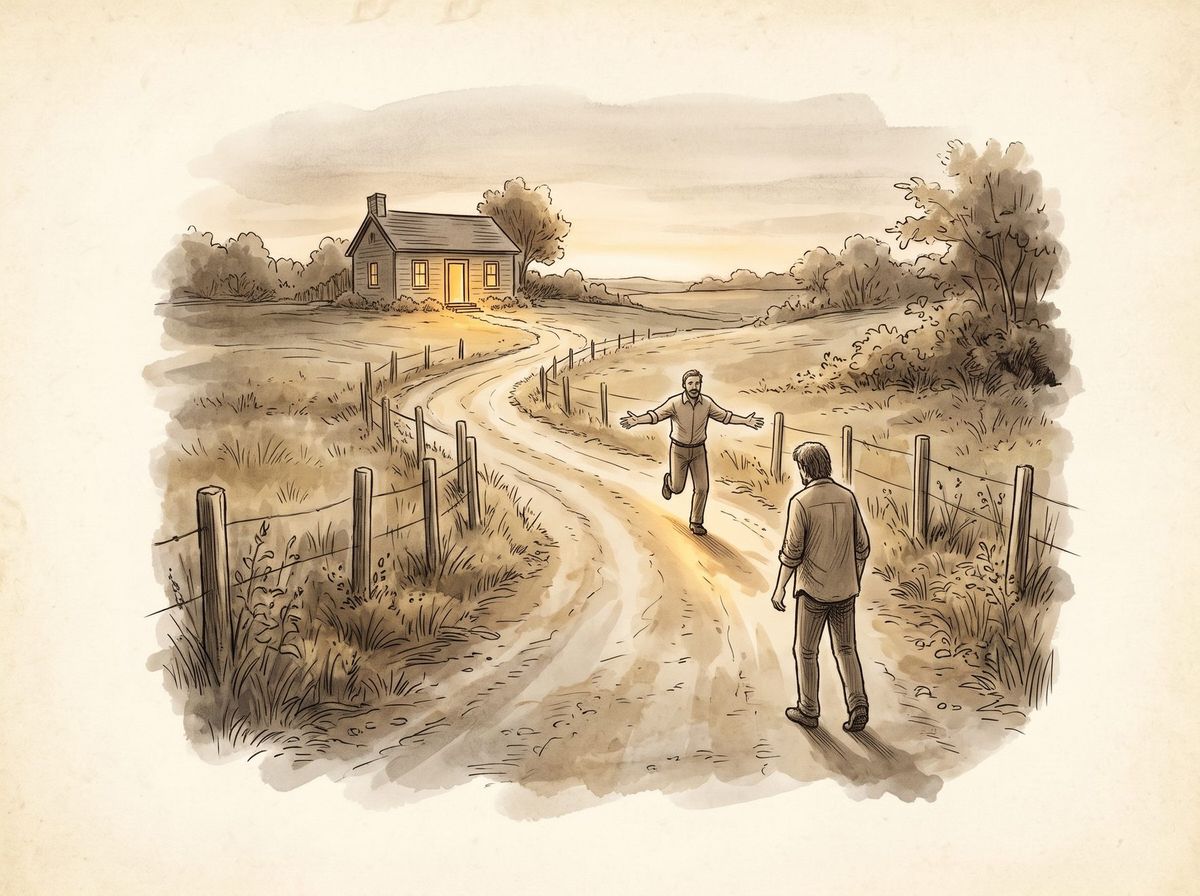
"And when he came to himself... he said, I will arise and go to my father... And he arose and came to his father."
Luke 15:17–20 · see also Revelation 2:4–5; Joel 2:12–13
Step one ended with an honest look. Step two is what you do with what you saw.
The far country doesn’t always look like a pigpen. Sometimes it looks like a choir stand. The prodigal’s tragedy wasn’t his distance from the father’s house; it was his distance from the father’s heart, and that distance began while he was still at home. Some of us have never missed a rehearsal, and yet we’ve been in a far country for years.
But watch what happens in the text: "he came to himself." That’s Step 1 — the examination. And then, immediately, the turn: "I will arise and go to my father." Do you hear it? "I will." We hear the King of Tyre (Lucifer) say "I will" five times, and each one pointed to a throne for himself. The prodigal says “I will” once —and it points home. This is the redeemed "I will," the only self-assertion that leads to life: the decision to get up and go back.
Notice what returning is not. He doesn’t clean himself up first. He doesn’t rehearse until he’s worthy. He comes as he is; rehearsing only a confession, and discovers the father has been watching the road the whole time: “And he arose and came to his father. But when he was yet a great way off, his father saw him, and had compassion, and ran, and fell on his neck, and kissed him” (Luke 15:20 KJV). In this story, only the Father runs.
Notice what returning is not, on the other side: it is not a feeling. The prodigal didn’t wait to feel restored; he got up and came back. Joel says, “And rend your heart, and not your garments, and turn unto the LORD your God: for he is gracious and merciful, slow to anger, and of great kindness, and repenteth him of the evil” (Joel 2:13 KJV); God isn’t asking for a dramatic display at the altar on Sunday. He’s asking for a decision on Monday. Revelation 2:5 (KJV) gives the returning worshipper a three-step map in a single verse: remember from whence you have fallen, repent, and do the first works. Go back to the things you did when the fire was first lit, when you sang to Him with no one listening, when you prayed because you wanted to, not because you were on the program.
My father used to tell a story about an older couple. The wife went in for a checkup, and while the doctor was examining her, he asked how things were at home. "Not well," she said. "Not well at all. He doesn’t love me anymore, so I’m getting a divorce." The doctor asked why she believed her husband didn’t love her. "Because he doesn’t do the things he used to do."
The doctor thought for a moment and said, "It’ll be two weeks before your test results come back. Here’s what I want you to do while we wait: go home and do the things you used to do for him — the things you did when you were first married."
Two weeks later she returned. The doctor told her the tests all came back fine, then asked, "Well — are you still contemplating divorce?" "Nope, I’m not!" she said. "He’s changed his ways!"
Now, catch what happened. Her husband hadn’t changed a thing. She returned to the first works, and the whole marriage warmed around her. When we complain that God feels distant, that He doesn’t move as He used to, we are that wife in the doctor’s office. God has not changed: "I am the LORD, I change not" (Malachi 3:6). We stopped doing the things we did when we first loved Him, and then we blamed the coldness on Him. Return to the first works, and you’ll be testifying within two weeks that God is moving again — when the truth is, He never stopped. The distance was never His.
Please remember renewal is not self-improvement. You cannot rehearse your way back to God. You can only return — and find Him already running.
Begin the same way you began Step One: a quiet space, a few settled breaths, God’s presence acknowledged. This time, let your soul surface a season you may have avoided remembering. Rest with what surfaces before you try to fix it. Then pick up your pen for the practice below.
This week, write out your own return in three short parts, following Revelation 2:5. Remember: describe a season when your love for God was at its warmest — what were the "first works" you did then? Repent: in a sentence or two, tell God plainly what you saw in Step 1, without excuse or decoration. Return: choose one first work — one — and put it back in your week at a specific day and time. Not five new disciplines. One old fire, relit.
Lucifer said, "I will ascend." The prodigal said, "I will arise." Which "I will" has been steering my gift — and what would arising look like for me this week?
Father, I have been in a far country — some of it while sitting in Your house. I remember when my love for You was warm, and I am done blaming the distance on You. Today I arise. Meet me on the road the way You always have, and teach my heart the first works again. Amen.

"Let the word of Christ dwell in you richly in all wisdom; teaching and admonishing one another in psalms and hymns and spiritual songs, singing with grace in your hearts to the Lord."
Colossians 3:16 · see also Psalm 119:11; Jeremiah 15:16
Here is a strange confession from a lifetime in music ministry: it is possible to sing the Word of God every week and never actually read it.
We learn the notes. We learn the parts. We learn the cutoffs, the dynamics, and where the sopranos come in. We can perform a song built on Scripture from memory — and never once open the Scripture it was built on. The Word passes through our mouths without ever passing through our hearts. We become couriers of a package we never opened.
But look at how Paul wires it in Colossians 3:16. First: "Let the word of Christ dwell in you richly." The singing comes second. Dwell — not visit on Sundays. Dwell — not drop by at rehearsal. Dwell! Not stop through when the choirs are on schedule. Not swing by when it’s your Sunday to sing. Dwell means the Word moves in, signs a lease with no end date, puts its name on the mailbox, hangs its pictures on the walls of your heart, and starts rearranging the furniture. Dwell means that when trouble knocks at midnight, the Word answers the door, because the Word lives here!
Then, out of that indwelling flow the psalms and hymns and spiritual songs, the overflow of a Word-filled heart. When the Word of God dwells in you, the psalms, the hymns, and those spiritual choruses keep ringing in your heart. Like that old spiritual said: "Up above my head, I hear music in the air... there must be a God somewhere!"
Now, I’m sure you’ve heard of an earworm. Science has a name for it: Involuntary Musical Imagery, or an IMI. It’s that catchy melody that repeats in your mind, involuntarily, long after the music has stopped playing. The term comes straight from the German word Ohrwurm. You know the experience — you hear a jingle Tuesday morning, and you’re still humming it Thursday night. You didn’t choose it. You didn’t schedule it. It moved in, and it plays whether you asked it to or not.
Here’s what I want you to catch: whatever dwells in you will play on repeat in you — involuntarily. That’s not just how melodies work; that’s how the indwelling Word works. Paul says it plainly: "singing and making melody in your heart to the Lord" (Ephesians 5:19). When the Word of Christ takes up residence, God gives you a holy earworm — the song of the Lord ringing in you when no music is playing, no choir is singing, and no organ is anywhere in sight. In the waiting room. On the night shift. At the graveside. Up above your head — and down inside your heart — you hear music in the air.
That’s how Paul and Silas sang at midnight in a Philippian jail with their backs bleeding and their feet in stocks (Acts 16:25). Nobody handed them a hymnal. The music was already dwelling in them — and when trouble locked the door, the song was what answered.
And here is the mercy in this step: God has already given every choir member a built-in Bible reading plan. It’s called the rehearsal schedule. Nearly every song we sing has a Scripture underneath it — sometimes quoted outright, sometimes woven through. Which means the anthem you’re learning this month isn’t just your assignment; it’s your appointment. The song in your folder is a door, and behind it is a text God wants to dwell in you before you ever stand to sing it. When you’ve sat with the Scripture all week — read it, prayed it, chewed on it — something changes on Sunday. You’re no longer presenting material. You’re testifying to a Word that’s been living in your house.
That’s the difference the congregation can always feel, even when they can’t name it. Psalm 119:11 says "Thy word have I hid in mine heart" — and a hidden word, like a hidden fire, gives off heat. Sing an unopened package and the people receive a performance. Sing an indwelling Word and the people receive a witness. So the real question of this step is simply this: what’s on repeat in you? Because something is. The world is glad to load your ears all week long. But the worshipper who feeds on the Word all week walks into Sunday with the melody already playing — and the singing you hear from the choir stand is just the overflow finally made audible.
Before you trace the song to its Scripture, spend a few minutes in solitude with the text alone. Settle, breathe, and let the passage speak before you go looking for what to do with it. Don’t rush to manage what it stirs. Sit with it first, then move into the practice below.
This week, take one song from the current rehearsal schedule and trace it to its Scripture. (If the source isn’t printed on the music, ask your director — or search the key phrase; most of our songs will lead you straight to a text.) Then, on three different days, spend ten minutes with that passage using three simple movements: Read it slowly, twice, out loud if you can. Pray it — turn its phrases into your own prayer back to God. Carry it — write one line from it somewhere you’ll see it daily (your mirror, your dashboard, your phone lock screen) and let it ride with you to rehearsal. When you stand to sing that song, you won’t be delivering someone else’s mail.
Of all the songs I can sing from memory, how many of their Scriptures have I ever read for myself — and which one is God appointing to me this week?
Lord Jesus, let Your Word dwell in me — not visit, dwell. Move into every room of my heart and rearrange what You find there. Give me a holy song that plays when no music is playing, so that when I stand to sing, the overflow is real. Amen.

"Lord, teach us to pray." · "But thou, when thou prayest, enter into thy closet, and when thou hast shut thy door, pray to thy Father which is in secret; and thy Father which seeth in secret shall reward thee openly."
Luke 11:1; Matthew 6:6 · see also Matthew 6:5; Mark 1:35
Of all the things the disciples watched Jesus do — preach to thousands, still storms, raise the dead — the only thing Scripture records them asking Him to teach them is this: "Lord, teach us to pray."
Think about that. They never said, teach us to preach. Never said, teach us to work miracles. They had watched Him long enough to locate the source. Everything public in Jesus’ life was flowing out of something private. Mark says He rose "a great while before day" and went to a solitary place to pray — before the crowds, before the miracles, before anybody was watching. The secret place came first. The power came out of it.
Now this is where this step presses on those of us in music ministry, and it presses hard. Church musicians pray in public for a living. We pray in the devotion. We pray over the offering. We sing prayers every Sunday — half our repertoire is addressed directly to God. Prayer is on our program. And that is exactly our danger, because Jesus warned about people who "love to pray standing in the synagogues... that they may be seen of men" — and then said the chilling part: "they have their reward." Meaning: the applause was the whole payout. Nothing reached heaven. It is possible to have a rich public prayer life and a vacant secret one — to be fluent in prayer as a performance skill and a stranger to prayer as communion.
Every musician already understands the difference, because every musician knows about the woodshed. Nobody becomes a real player on stage time alone. The stage shows what the woodshed built. The hours alone — just you and the instrument, no audience, nothing to prove — that’s where the music actually gets in you. The secret place is the woodshed of the soul. Shut the door. Phone down. No audience, no microphone, no program to follow. Just you and the Father who "seeth in secret."
A colleague once told me she had never known a piano teacher who let so many students go. I explained it to her this way: students who take lessons because they want to be on stage are not the students I prefer to teach. I am looking for students so drawn to the piano that the practice room has become their sanctuary.
Now hear the parable in that. The Father is not auditioning performers; Jesus said "the Father seeketh such to worship him" — worshippers in spirit and in truth (John 4:23). The ones who pray for the audience? Jesus said they have their reward — the audience was the whole payout. But the student drawn to the Teacher Himself, the one for whom the shut door is not a discipline but a delight — that is the one He pours His deep things into. The secret place is not a requirement to satisfy. It is a sanctuary to fall in love with. And the Father can tell the difference — He always could.
But hear this carefully, because it is the mercy of the whole step: the secret place is not rehearsal for Sunday. It is not preparation for the real moment. It is the real moment. In the closet, you’re not warming up for an audience — you’re finally before your only Audience. The One whose opinion of your worship is the only review that will ever matter is in that room, listening, delighted that you came. Sunday isn’t the concert and the closet the practice room. The closet is the concert. Sunday is just the overflow made public — "thy Father which seeth in secret shall reward thee openly."
And when the disciples asked, Jesus didn’t teach them a technique. He gave them a pattern — the Lord’s Prayer — short enough to learn in a minute, deep enough to spend a lifetime in. Which tells you something: God isn’t grading length or vocabulary. He’s after presence. Yours.
Some years back, Mary Mary — with Kierra Sheard — put this truth on the radio in a song called "God in Me." The song paints a picture of somebody whose life is gleaming: favored, successful, sharp, winning everywhere they go, while everybody around them is trying to figure out the secret. And the song’s answer? It’s not the wardrobe. It’s not the talent. What they don’t know is what happens when that person gets home and the door closes — down on the floor, on their knees, where nobody can see. The shine everybody sees in public is being produced by the kneeling nobody sees in private.
That’s not just a lyric; that’s Matthew 6:6 set to a groove. "Can you feel it?" The Father who sees in secret rewards openly — and when the reward shows up in public, the world will try to explain it a hundred different ways. Charisma. Talent. Luck. But the worshipper knows the truth: it’s the God in me. Pastor H. B. Charles Jr. said it in four words, the title of his book on prayer: it happens after prayer. The breakthrough happens after prayer, the anointing happens after prayer, the peace that follows some saints into the room happens after prayer — none of it is manufactured on stage. It happens after prayer. Every time. IT’S THE GOD IN ME!
So when the congregation says of a singer, "there’s just something on them" — they’re not wrong. There is. It got on them behind a shut door.
This is where the secret place and the Practice of Solitude (Appendix) are the same room. Before you pray the Lord’s Prayer below, sit quietly for a few minutes first. Prepare the space, settle your breathing, and simply notice what is true, the way Barton teaches. Let whatever surfaces come without managing it. Then pray.
This week, keep a daily appointment in the secret place — ten minutes, same time each day if you can, door literally shut, phone in another room. Use the Lord’s Prayer as your walking path, one phrase at a time, in your own words: Our Father — spend a moment just being His child, no requests. Hallowed be thy name — worship Him for who He is (speak it, or sing it softly — but only for Him). Thy kingdom come, thy will be done — surrender the day’s real situations by name. Give us this day — ask plainly for what you need. Forgive us, as we forgive — deal honestly with both directions; name names. Lead us, deliver us — cover your weak places. Ten minutes. No performance. If your mind wanders, come back without shame — the Father isn’t scoring you; He’s enjoying you.
If God answered only the prayers I prayed with the door shut — nothing from the program, nothing sung on a microphone — how much would He have heard from me this month?
Father, You see in secret. Forgive me for every prayer I performed and never prayed. I am shutting the door now — no program, no microphone, no audience but You. Teach me to pray. And let whatever shines on me in public be nothing but the God in me. Amen.
"And he said unto them, Come ye yourselves apart into a desert place, and rest a while: for there were many coming and going, and they had no leisure so much as to eat."
Mark 6:31 · see also 1 Kings 19:4–8; Psalm 23:2–3; Exodus 20:8–10
Here is the problem nobody warned you about when you joined the music ministry: your day of rest is your day of work.
The rest of the congregation comes to Sunday to be poured into. You come to pour out. They arrive at ten-forty-five; you’ve been there since early morning — devotion, run-through, sound check, robing up. They go home after benediction; you’ve got a program at three. When Scripture says "remember the sabbath day, to keep it holy," most believers hear an invitation. Church musicians hear a schedule conflict. And so, year after year, we serve everyone else’s sabbath while never keeping one of our own — and we wonder why the well runs low.
Look at the setting of Mark 6:31. The disciples had just come back from ministry — successful ministry, preaching and healing — and the crowds were so thick "they had no leisure so much as to eat." Sound familiar? Coming and going, program after program, no margin even for a meal. And what does Jesus prescribe for His most faithful workers? Not another assignment. "Come ye yourselves apart into a desert place, and rest a while." Mark the order of the words: come apart — before you come apart. Rest is not a reward Jesus gives the finished; it is a provision He commands for the faithful. If the Lord of the harvest ordered rest for the harvesters, then rest is not laziness. Rest is obedience.
And if you need proof that exhaustion is a spiritual condition, look under the juniper tree. Elijah had just come from the greatest worship service in the Old Testament — fire falling on Mount Carmel, the people on their faces crying "The LORD, he is the God." Twenty-four hours later this same prophet is collapsed in the wilderness asking God to take his life.
From the mountaintop to the valley’s bottom in one day. Burnout doesn’t skip the anointed — it stalks them, because nobody is more depleted than someone who just poured out everything. And watch God’s remedy. No rebuke. No sermon. The angel’s prescription was sleep, food, more sleep, more food — "Arise and eat; because the journey is too great for thee." Sometimes the most spiritual thing a worn-out worshipper can do is take a nap and eat a meal. Your body is not the enemy of your ministry; it is the instrument of it — and even the Levites served in rotations, not perpetually (1 Chron. 23–25). God built shifts into the temple before we built burnout into the church.
I learned this early. When I first started preaching, I came home one day too tired to even eat. Exhausted as I was, I wanted to sit with my dad and get his take as a veteran pulpiteer. He listened, and then he said: "Son, you’re experiencing the Elijah Syndrome. It’s a post-mountaintop experience. Just thank the Lord for the fellowship. Beg forgiveness for the flesh, and go to sleep."
That was the whole counsel — and it was enough. He didn’t question my calling because I was worn out, and he didn’t let me mistake exhaustion for failure. Gratitude for what God did. Honesty about what flesh is. And obedience to the oldest prescription in the book: arise and eat... and he laid down again. If the emptiness after the pouring-out has a name — the Elijah Syndrome — then it isn’t a crisis of faith. It’s a signal from the instrument. Thank Him, be human, and go to sleep. The God who met Elijah after the nap will still be there in the morning.
So what does sabbath look like when Sunday is your shift? It looks like this: if Sunday is your workday, another day must become your sabbath. Not a day off to catch up on errands — a day apart to catch up with God. The principle of Exodus 20 is one-in-seven, set apart and kept holy; the Levite’s calendar just locates it differently. Choose your desert place — and remember, in Mark 6 the desert place isn’t punishment, it’s privacy. It’s where Jesus takes people He wants to Himself.
Let the sabbath open the way solitude always does. Find your space, settle your body, and notice what surfaces once the doing stops: the ache, the guilt, the relief. Rest with it rather than fixing it. That noticing is itself part of the sabbath. Then keep the practice below.
Choose one block of time this week — a half-day if a full day isn’t yet possible, but on your calendar like a rehearsal, because what doesn’t get scheduled gets sacrificed. Then keep it as an Isaiah 58 fast, the kind of fast God says He has chosen (Isa. 58:6–7): not only giving something up, but turning what you give up toward God and toward others. It has three movements. Abstain — lay down the doing. No rehearsing, no planning the setlist, no ministry email, and fast the noise too: the phone, the scrolling, even — hear me — the performing of anything. If you’re a musician, you may need to fast your instrument for a day, so you remember you are a child before you are a player. Align — every time your hands itch for the phone or the keys, or guilt whispers that you’re being lazy, let it ring like an alarm clock to pray: "Lord, You are God and I am not. The choir is Yours. The ministry is Yours. I receive this rest as Your command and Your gift." Then do restful things without apology — sleep, walk, eat well, sit with people you love. The angel fed Elijah twice before giving him a word. Allocate — and here is the Isaiah 58 twist: give the rest away too. Use part of your sabbath to be ministered to — sit under someone else’s singing, let somebody else pray for you, be the congregation for once. A worshipper who only ever serves forgets what it feels like to receive, and receiving is half of worship.
When was the last time I sat in a service with nothing to do but worship — and what does my answer tell me about how long I’ve been pouring out without being refilled?
Lord of the sabbath, You commanded rest before I ever earned it. So I lay down the doing and receive the gift. I thank You for the fellowship of the mountaintop; I ask forgiveness for the frailty of my flesh; and I am going to sleep in Your keeping. Restore my soul — the journey is too great for me without You. Amen.

"Behold, how good and how pleasant it is for brethren to dwell together in unity!... for there the LORD commanded the blessing, even life for evermore."
Psalm 133:1, 3 · see also 1 Samuel 18:6–9; Numbers 16:9–10; Psalm 84:10; James 3:9–10; Matthew 5:23–24
Everything up to this step, you could do alone. Examine alone, return alone, feed on the Word alone, pray behind a shut door alone, rest alone. But God will not let renewal end there — because He is not renewing soloists. He’s renewing a choir.
Here is the truth about ensemble ministry: the choir stand is where your renewal gets tested. It is one thing to have a fixed heart in the secret place. It is another thing to keep it fixed standing eighteen inches from the person who got the solo you wanted. The desert place proves your devotion; the choir stand proves your character. And there are two breaches that have split more choirs than any argument over tempo or robes ever did. One lives in the heart. The other lives in the mouth.
The breach in the heart: jealousy.
Do you know what sparked the most famous jealousy in the Old Testament? A song. Saul and David came home from battle, and the women came out singing: "Saul hath slain his thousands, and David his ten thousands." One lyric. One comparison set to music. And the Bible says, "Saul eyed David from that day and forward" (1 Sam. 18:9).
Eyed him. Every choir member knows that eye. Somebody else got the lead. Somebody else got the ad-lib, the standing ovation, the compliments at the door — and something in you started eyeing them on the way home. You still sang next to them. Still hugged their neck. But the eye had opened, and the eye kept watching. Hear me: jealousy in a gifted person is Lucifer’s sin wearing a choir robe. It is the gift turned into a scoreboard — measuring my endowment against yours, as if the Giver ran out of glory to go around. Saul’s jealousy cost him his peace, his kingdom, and finally his mind — and David hadn’t done a thing to him but sing well and be celebrated for it.
But don’t close the book there, because Scripture also shows us jealousy’s lineage redeemed. Korah rose up envious of position — "seek ye the priesthood also?" (Num. 16:10) — and the ground opened under him. Yet God spared his sons. And generations later, it is the sons of Korah whose names sit atop some of the sweetest psalms we still sing — including the one that says, "I had rather be a doorkeeper in the house of my God, than to dwell in the tents of wickedness" (Ps. 84:10). Sit with that. The family that fell to wanting a bigger position produced descendants whose signature song is contentment with the doorkeeper’s part. That is what grace does with a jealous bloodline. Your family line in ministry doesn’t have to end where the eyeing started — it can end in a psalm.
The breach in the mouth: criticism.
James writes as if he’d sat through a choir rehearsal: "Therewith bless we God... and therewith curse we men... Out of the same mouth proceedeth blessing and cursing. My brethren, these things ought not so to be" (James 3:9–10).
The same mouth. That’s the scandal for singers specifically — the instrument itself is double-booked. The mouth that delivered the anthem at eleven o’clock delivers the commentary at twelve-thirty: the director’s song choice, the alto’s outfit, who can’t hear their part, who ought to sit down from the microphone. We already met these folks in the opening pages: the churchers, focused on everything and everybody except the Lord. And the tragedy isn’t just what the criticism does to the person talked about. It’s what it does to the instrument. You cannot consecrate a mouth on Sunday that you weaponize on Monday. An offering, once used as a weapon, has to be cleansed before it’s an offering again.
That’s why Jesus puts reconciliation ahead of worship: "If thou bring thy gift to the altar, and there rememberest that thy brother hath ought against thee... first be reconciled to thy brother, and then come and offer thy gift" (Matt. 5:23–24). First. For a singer, the gift on the altar is the song — and Jesus says the song can wait while you make a phone call.
And why does all this mending matter so much? Because of what unity releases. "Behold, how good and how pleasant it is for brethren to dwell together in unity... for there the LORD commanded the blessing." There — location word. The commanded blessing has an address, and its address is unity. It is the same truth in 2 Chronicles 5: when the trumpeters and singers were as one, making one sound — then the glory filled the house. Not when the hundred and twenty trumpeters were talented (2 Chron. 5:12). When they were one. The glory doesn’t fall on the most gifted choir. It falls on the most united one. I felt this very truth the Sunday every ensemble at St. John stood together as one combined choir and made one sound — and sensed God drawing near. That day was not a special occasion. It was a preview.
Before you go to mend anything, go to God first. Sit quietly and let Him show you the eye you have been keeping and the words you have been keeping back, without excusing them and without punishing yourself for them. Rest there a moment. Then do the three mendings below.
Mend the heart: Go to the member you’ve been eyeing — the one whose gift, position, or shine has been working on you — and do the one thing jealousy cannot survive: celebrate them out loud. Face to face or by phone, tell them specifically what God has put in them and that you thank Him for it. Jealousy is starved by the blessing it refuses to speak. (And if the eyeing runs deep, take it into your secret place first — Step 4 taught you where the floor is.)
Mend the mouth: Take the Isaiah 58 fast and aim it at the tongue: this week, fast all criticism of anyone in the ministry — to their face, behind their back, in the group chat, in the parking lot. When the commentary rises (it will), use it as your alarm clock to Align: pray one sentence of blessing over the very person you were about to critique. Then Allocate what you withheld: for every criticism you fasted, speak one word of encouragement to somebody in the ministry who never gets any.
Mend the breach: If there is a member you’re at odds with — an old wound, a cold silence, a grudge with gray hair on it — Matthew 5 gives your assignment and its deadline: before the next time you sing. Not to relitigate who was right. Just to say: we serve at the same altar, and I don’t want anything standing between us there. You handle your side; leave their side with God.
If the glory of God fell only where my relationships in this ministry are whole — how much of the choir stand would it cover?
God of unity, search my eye and my mouth. Take the scoreboard out of my heart and put a blessing in my speech. Mend what I have torn and give me the courage to celebrate the gift in my brother and my sister out loud. Make us one sound and command Your blessing there. Amen.

"Those from among you shall build the old waste places; you shall raise up the foundations of many generations; and you shall be called the Repairer of the Breach, the Restorer of Streets to Dwell In."
Isaiah 58:12 (NKJV) · see also Isaiah 6:1–8; Isaiah 58:6–11; Luke 22:32; 1 Peter 4:10
Now we come to the reason for it all.
Six steps ago, God stopped us at the doorway of our own sanctuary. He searched us, turned us, filled us with His Word, met us in the secret place, laid us down to rest, and mended us to one another. Understand: none of that was for its own sake. God does not repair instruments to hang them on the wall. He fixes the altar so He can send you to the alley.
Remember how this journey works. God pours gifts and raw talent into a life. Then He walks that life through trials and sifting — not to break it, but to sharpen it. And then — then — He places the sharpened tool right where it’s needed most. Like He told Peter: "When thou art converted, strengthen thy brethren" (Luke 22:32). When you come through, somebody is waiting on the other side of your coming through. Renewal that ends with you was never finished.
Look at the pattern in Isaiah’s own story, because chapter 6 is a worship service. The Lord high and lifted up, the temple filled with His glory, the seraphim singing "Holy, holy, holy." And what happens to the worshipper in that room? First, examination: "Woe is me! I am undone; I am a man of unclean lips." (Step 1 — the honest look. And notice: it found his mouth.) Then the coal from the altar touches his lips: "thine iniquity is taken away." (The mouth we mended in Step 6 — cleansed at the altar, of all places.) And then, only then, the voice: "Whom shall I send, and who will go for us?" And the man with the cleansed mouth answers: "Here am I; send me." Why? Don’t miss it! Before the coal ever touched him, he had already seen more than himself: "I dwell in the midst of a people of unclean lips" (Isa. 6:5). He saw his community, a people with the same issues he had, and once he was cleansed, he could not leave them where they were.
Do you see the arc of this whole book in that one scene? The story began with a covering cherub who looked at his own brightness and said, I will ascend. It turned when a prodigal came to himself and said, I will arise. And it ends when a cleansed worshipper looks up from the altar and says, Here am I — send me. Three "I wills." Only one of them leads to life, and it is the one that volunteers.
And here is a wonder tucked into the text. When the sent servant gets into the alley — loosening bonds, feeding the hungry, covering the naked — God makes a promise: "Then shalt thou call, and the LORD shall answer; thou shalt cry, and he shall say, Here I am" (Isa. 58:9). Catch it: the servant says Here am I — and God answers with the very same words. Here I am. When you go where God sends, you discover He is already standing in the alley waiting for you. Serving isn’t leaving God's presence to go work. It is meeting Him at His other address.
So — where is your alley? It is closer than you think. A broken block. A hurting house. A name on your street. The coworker who has been quietly coming apart. The young musician with all gifts and no guide. The member who disappeared from the choir stand three months ago, and nobody called. The shut-in who hasn’t heard live singing since the last funeral she could attend. Your gift was never meant to live only between the call to worship and the benediction. The same voice that blesses the sanctuary on Sunday can sit by a hospital bed on Thursday and sing somebody’s fear down. "As every man hath received the gift, even so minister the same one to another, as good stewards of the manifold grace of God" (1 Pet. 4:10) — manifold grace: grace with many folds in it, enough shapes of grace to fit every shape of brokenness on your street.
And when you go, watch the chain reaction God promised: then your light breaks forth like the morning. Then your healing springs forth speedily. Then the glory of the LORD becomes your rear guard. Some of the renewal you have been seeking in the first six steps is waiting for you in the seventh — because some things God only pours into vessels that are pouring out.
You came into this book as a choir member, a musician, a worship leader. You leave it with a new title, conferred by God Himself: Repairer of the Breach. Restorer of Streets to Dwell In.
Some of you have been sitting at the altar for years. And God is saying: I’ve got an alley with your name on it.
Ask your dangerous question from a quiet place, not a busy one. Settle, breathe, and let the answer surface the way solitude teaches, rather than the way a to-do list does. Then go.
This week, ask God one dangerous prayer, three days in a row: "Lord, show me my alley — and give me the courage to go." Then write down the first name or place He brings to mind. (He will. He has been waiting to be asked.) Before the week is out, take one step toward it with the gift He gave you: make the visit, make the call, sing at the bedside, sit with the young musician, invite the vanished member back by name. Then — and this matters — bring it back to the body: tell one other member of the ministry what you did and who you found there. Alleys are best entered in twos, and testimony recruits.
God has spent years preparing me — gifting, sifting, sharpening. If He has an alley with my name on it, whose name is in it — and what has been keeping me at the altar?
Here am I, Lord — send me. You have poured into me, sifted me, and sharpened me; now place me where I am needed most. Show me the alley with my name on it, and go with me into it. Let me leave the altar carrying Your fire, until I answer to the name You confer: Repairer of the Breach. Amen.

Having walked the pathway from the altar toward the alley, I make this covenant before God:
I will keep an honest heart before God and let Him search me. When I drift, I will not blame the distance on Him — I will arise and return to the first works. I will let the Word of Christ dwell in me, not visit. I will meet my Father in the secret place before I meet His people in the sanctuary. I will receive rest as His command and His gift. I will guard my eye from jealousy and my mouth from criticism and pursue unity with my brothers and sisters — for there the Lord commands the blessing. And I will carry my gift beyond the choir stand, into the alley He assigns me, until I answer to the name He confers: Repairer of the Breach.
"My heart is fixed, O God, my heart is fixed: I will sing and give praise." — Psalm 57:7
Signed: _________________________________________
Date: _________________________________________
This covenant is meant to be renewed. When a dry season has come and you have walked the pathway again, return here and add the date. Let this page become a record of your walk.
Renewed on: _________________________________________
Renewed on: _________________________________________
Renewed on: _________________________________________
Renewed on: _________________________________________
Renewed on: _________________________________________
Renewed on: _________________________________________
"And when thou art converted, strengthen thy brethren."
Luke 22:32
A final word to the directors, musicians, section leaders, and ministry leaders — everyone who carries others.
Your renewal is upstream of everyone else’s. A ministry can only drink downstream of its leader’s secret place. The people you lead will take their cue not from what you announce but from what is on you — and here is the sobering truth every director already knows from the other side of the rehearsal: the congregation can hear your secret place. A director hears in eight bars who has been in the woodshed. A discerning church feels in one verse who has been in the closet. Lead from the overflow, and there will be something to drink.
A few tools for shepherding renewal in those you lead. Print the Scripture beneath every song in the folder, so the anthem carries its appointment with it. Open rehearsal by reading the anthem’s text aloud — one minute that turns the whole rehearsal calendar into a congregation-wide reading plan. Guard the rotations: the Levites served in shifts, and rest you do not schedule for your musicians, burnout will schedule for them. Model the fast of the mouth, for a ministry’s tongue takes its tuning from its leader. And celebrate gifts out loud from the front — public honor starves private jealousy before it can open its eye.
Then bless your people into the alley. Measure the ministry not only by the sound it makes on Sunday, but by the streets it restores by Thursday — the beds sat beside, the calls made, the vanished members called home by name. A choir that only sings in the sanctuary is an instrument played at half its range.
Pray for your people by name. Let them see you at the altar first. And go to your own alley, leader — you have one too. The God who answered "Here I am" to His servants will meet you there.
It happens after prayer. Every time.
— H. L. Parker, Jr., Minister of Music
St. John Missionary Baptist Church
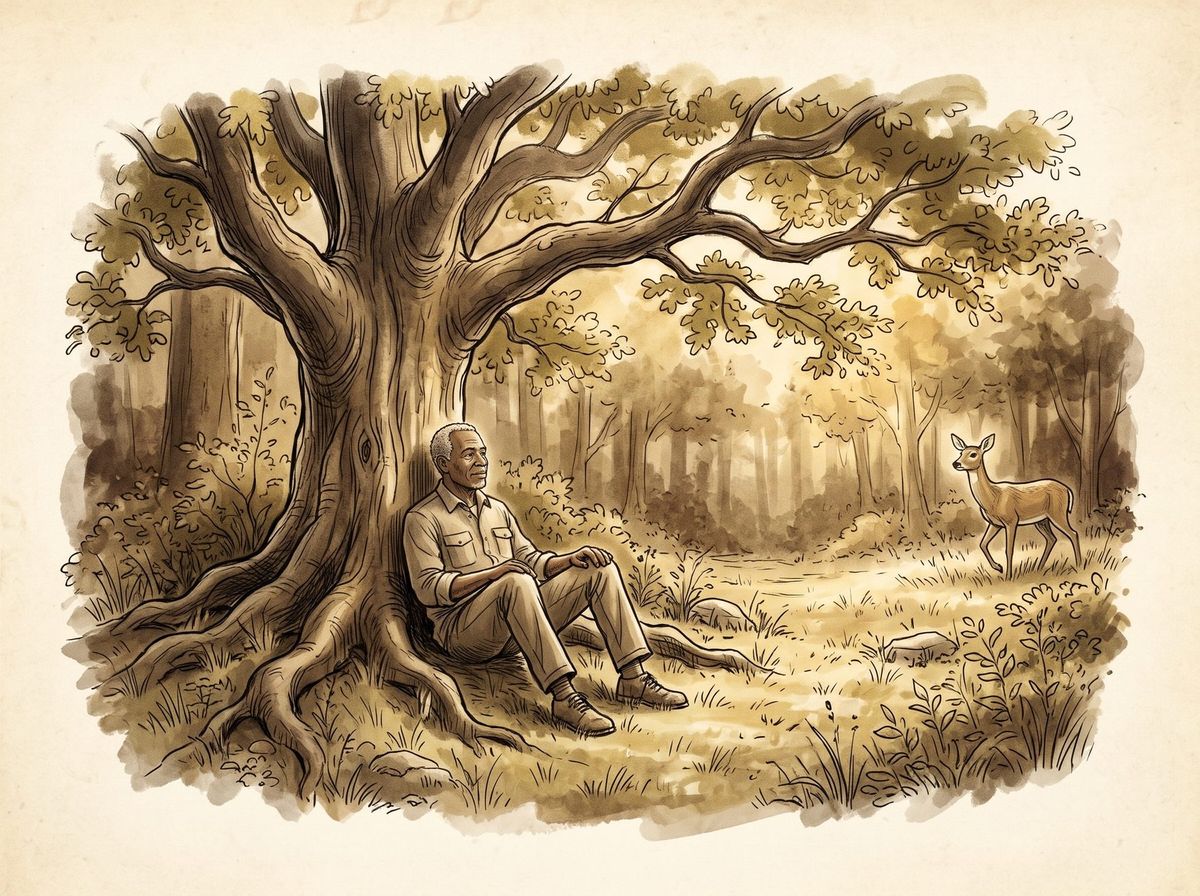
This is the practice behind the opening lines of each step in this book: a simple, repeatable way of sitting quietly in God’s presence long enough to let your soul tell the truth. I learned its shape from Ruth Haley Barton, whose writing on solitude has marked my own walk, and I commend her books to you by name at the end of this page. What follows is the practice as I teach it to musicians.
Choose your place. Every player has a practice room. Give your soul one too: a favorite chair, a quiet corner, a parked car before rehearsal, any place comfortable and safe enough for you to be honest before God.
Settle and breathe. Sit still for a few unhurried moments and breathe deeply. Let the body arrive first; the soul comes in behind it. Become aware that God is present, and that you want to be present with him.
Let your soul speak. Barton passes along a picture she borrows from Parker Palmer: the soul is like a wild animal, shy and easily frightened. Crash through the woods and it hides. But sit quietly at the base of a tree long enough, and it may show itself. So sit, without rushing or forcing anything, and let your soul surface what it has had a hard time saying: a joy worth celebrating, a loss still grieving, tears waiting to be shed, a question that keeps stirring.
Rest with what surfaces. Barton’s counsel here is the wisest I know: do not rush to fix what you find or manage it. Be with it, and let God be with you in it. There is a difference between fighting a thing yourself and being still while God fights for you. Ask him: what would it mean to be still and let you work right here?
Return often. Quiet, then letting the soul speak, then resting in God’s presence. Practice the pattern until it becomes the natural way you enter solitude, the way scales become the natural way you enter the instrument.
For further reading: Ruth Haley Barton, Sacred Rhythms: Arranging Our Lives for Spiritual Transformation (InterVarsity Press, 2006) and Invitation to Solitude and Silence (InterVarsity Press, 2004); Parker J. Palmer, A Hidden Wholeness: The Journey Toward an Undivided Life (Jossey-Bass, 2004).
“There is one thing that we alone can give God . . . and that is our personal love. No one else can give God our personal love. This is our great significance.”
— M. Basil Pennington, Finding Grace at the Center
You can’t get to the alley until you’ve been to the altar. Let this practice be part of how you get there.